Featured Blog

LeapOut Gets Media Spotlight on Award-Winning TV & Radio Show Pilipinas, Ngayon Na

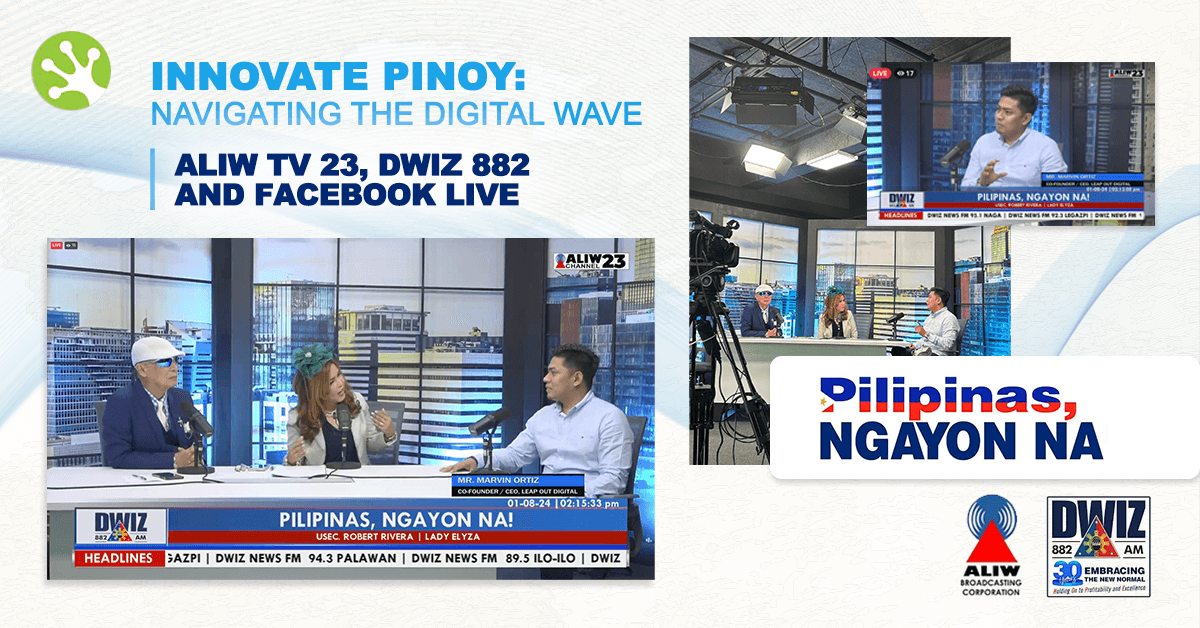
Marvin, LeapOut President and CEO, imparted digital marketing insights on the radio program on the topic Thriving Businesses: Ride the Digital Wave.  Marvin Ortiz, LeapOut Co-Founder and CEO, had the honor of guesting in a radio program Pilipinas, Ngayon Na on January 8, 2024, aired on DWIZ 882 and Aliw TV 23 and hosted by Undersecretary (USec.) Robert Rivera and Lady Elyza. Marvin’s guesting highlighted the power of digital marketing and e-commerce to the hosts, who, like many ordinary Filipinos, are still not well-versed but are enthusiastic about this thriving sector. Helping Businesses Leap Into Digital At the start of the program, USec. Rivera stressed the importance of keeping abreast with developments taking place on the Internet.  “We know that AI and digital are all over. That’s why communication time has been cut considerably. With the touch of a finger, you can video chat anywhere in the world and talk to anyone.” USec Rivera also admitted that many businesses in the Philippines are struggling to compete because they still opt to use traditional methods. However, he emphasized that to be competitive in today’s world, they need to keep up with the fast-changing business practices such as establishing an online business presence.  Taking off from this backgrounder by USec Rivera, Marvin introduced LeapOut and its mission.  He said that the company aims to help small and medium enterprises (SMEs) and even micro-enterprises “to leap into its digital transformation.” The company equips companies with capabilities to break into and then grow and succeed in the digital realm.  “We are a digital marketing agency that helps businesses maximize their business presence online — especially legacy businesses — to spot more opportunities and thrive online.”   “From First-Scale to Full-Scale” Marvin, one of the pioneers in the country’s digital marketing landscape, commented that it is LeapOut’s mission to help Filipino businesses, especially those who are eager to establish their footprint online via digital marketing.  “The goal of digital companies is not only to share information but also to help users navigate the digital landscape by elevating their user experience. Usually, we help companies that have the vision and goal to serve online customers but have no capabilities and capacities to venture into digital media,” he said. To guarantee success in this transformation, Marvin said LeapOut is committed to empowering its clients to succeed from laying their foundation online to providing excellent customer experience. This end-to-end approach is what digital marketing professionals consider the “from first-scale to full-scale” approach.   Using this extensive approach, the company has provided and is currently providing these services to its clients from SMEs to those belonging to the top ten Philippine companies.  “We have already helped and continue helping businesses and organizations in the Philippines. in transforming their digital footprint,” Marvin added. LeapOut’s clients include household brands such as SM, Ajinomoto, Cebuana Lhuillier, Malayan Insurance, and Wilcon Depot.  To accomplish this, LeapOut helps conceptualize, create, and compose digital content for its three key businesses: social media and content marketing, e-commerce, and paid media. The company started as a digital marketing agency. The company later ventured into e-commerce development and programmatic advertising.    Screengrab of Marvin explaining how digital marketing benefits businesses during the radio interview streamed live on Pilipinas, Ngayon Na Facebook page.  Hypertargeting 101 To showcase what digital marketing can do to businesses on the program, Marvin described the power of programmatic advertising. With this technology, companies can now show their marketing content and copies directly to their specific intended audience.  He demonstrated this technology through an example. A company wants to offer two contents to two demographics: Content A is for seniors and Content B is for millennials. With programmatic advertising in Google and social media platforms, the company can show only Content A for seniors in the platform you subscribed to and Content B to only your target millennial audience. Since this method will only allow your content to be seen by your ideal audience, it provides amazing efficiency to your campaign. It lowers the cost as it prevents you from showing the ads to unintended audiences. And because only your target people can access your content, your probability of sales increases considerably.   It Started With A Mission When talking about LeapOut’s mission, Marvin shared the humble beginnings of the company. He recalled the time when a plumber sought his service when he was still an advertising agent in 2009. Short of funds to pay for the ad, it took some time for the plumber to pay for the creative and publish it online.  At a time when the internet was just starting and selling online services was difficult, the freelance plumber believed that the new tech would open business opportunities. This kindled Marvin’s passion to open an agency to serve as a launch pad for the growth of SMEs and micro businesses. With digital marketing, he believes these small and startup businesses have a “leveling playing field” where they can compete head-on with established companies and corporations. Cybersecurity Insights Aside from digital marketing, Marvin also provided his insights on cybersecurity, especially on email and social media accounts.  “Social media accounts like Messenger and email addresses can be hacked and faked,” he stressed.  One of his takeaways is to be mindful of emails that we receive. For email, check for the sender. To find out if the email address or URL is legitimate, check the domain name if it matches the exact spelling of the domain name (.com or .edu) of legitimate sites. Another thing you can do is to verify whether the sender uses a real name. When you are doubtful of the sender, you should research if the email is factual over the Internet or confirm with your friends and people you trust. Pilipinas, Ngayon Na! airs every 2 pm – 3 pm on DWIZ 882 kHz and Aliw TV 23. The entire interview can be streamed on the Pilipinas, Ngayon Na Facebook page.
Continue Reading

Featured Blog

LeapOut Gets Media Spotlight on Award-Winning TV & Radio Show Pilipinas, Ngayon Na

Marvin, LeapOut President and CEO, imparted digital marketing insights on the radio program on the topic Thriving Businesses: Ride the Digital Wave.  Marvin Ortiz, LeapOut Co-Founder and CEO, had the honor of guesting in a radio program Pilipinas, Ngayon Na on January 8, 2024, aired on DWIZ 882 and Aliw TV 23 and hosted by Undersecretary (USec.) Robert Rivera and Lady Elyza. Marvin’s guesting highlighted the power of digital marketing and e-commerce to the hosts, who, like many ordinary Filipinos, are still not well-versed but are enthusiastic about this thriving sector. Helping Businesses Leap Into Digital At the start of the program, USec. Rivera stressed the importance of keeping abreast with developments taking place on the Internet.  “We know that AI and digital are all over. That’s why communication time has been cut considerably. With the touch of a finger, you can video chat anywhere in the world and talk to anyone.” USec Rivera also admitted that many businesses in the Philippines are struggling to compete because they still opt to use traditional methods. However, he emphasized that to be competitive in today’s world, they need to keep up with the fast-changing business practices such as establishing an online business presence.  Taking off from this backgrounder by USec Rivera, Marvin introduced LeapOut and its mission.  He said that the company aims to help small and medium enterprises (SMEs) and even micro-enterprises “to leap into its digital transformation.” The company equips companies with capabilities to break into and then grow and succeed in the digital realm.  “We are a digital marketing agency that helps businesses maximize their business presence online — especially legacy businesses — to spot more opportunities and thrive online.”   “From First-Scale to Full-Scale” Marvin, one of the pioneers in the country’s digital marketing landscape, commented that it is LeapOut’s mission to help Filipino businesses, especially those who are eager to establish their footprint online via digital marketing.  “The goal of digital companies is not only to share information but also to help users navigate the digital landscape by elevating their user experience. Usually, we help companies that have the vision and goal to serve online customers but have no capabilities and capacities to venture into digital media,” he said. To guarantee success in this transformation, Marvin said LeapOut is committed to empowering its clients to succeed from laying their foundation online to providing excellent customer experience. This end-to-end approach is what digital marketing professionals consider the “from first-scale to full-scale” approach.   Using this extensive approach, the company has provided and is currently providing these services to its clients from SMEs to those belonging to the top ten Philippine companies.  “We have already helped and continue helping businesses and organizations in the Philippines. in transforming their digital footprint,” Marvin added. LeapOut’s clients include household brands such as SM, Ajinomoto, Cebuana Lhuillier, Malayan Insurance, and Wilcon Depot.  To accomplish this, LeapOut helps conceptualize, create, and compose digital content for its three key businesses: social media and content marketing, e-commerce, and paid media. The company started as a digital marketing agency. The company later ventured into e-commerce development and programmatic advertising.    Screengrab of Marvin explaining how digital marketing benefits businesses during the radio interview streamed live on Pilipinas, Ngayon Na Facebook page.  Hypertargeting 101 To showcase what digital marketing can do to businesses on the program, Marvin described the power of programmatic advertising. With this technology, companies can now show their marketing content and copies directly to their specific intended audience.  He demonstrated this technology through an example. A company wants to offer two contents to two demographics: Content A is for seniors and Content B is for millennials. With programmatic advertising in Google and social media platforms, the company can show only Content A for seniors in the platform you subscribed to and Content B to only your target millennial audience. Since this method will only allow your content to be seen by your ideal audience, it provides amazing efficiency to your campaign. It lowers the cost as it prevents you from showing the ads to unintended audiences. And because only your target people can access your content, your probability of sales increases considerably.   It Started With A Mission When talking about LeapOut’s mission, Marvin shared the humble beginnings of the company. He recalled the time when a plumber sought his service when he was still an advertising agent in 2009. Short of funds to pay for the ad, it took some time for the plumber to pay for the creative and publish it online.  At a time when the internet was just starting and selling online services was difficult, the freelance plumber believed that the new tech would open business opportunities. This kindled Marvin’s passion to open an agency to serve as a launch pad for the growth of SMEs and micro businesses. With digital marketing, he believes these small and startup businesses have a “leveling playing field” where they can compete head-on with established companies and corporations. Cybersecurity Insights Aside from digital marketing, Marvin also provided his insights on cybersecurity, especially on email and social media accounts.  “Social media accounts like Messenger and email addresses can be hacked and faked,” he stressed.  One of his takeaways is to be mindful of emails that we receive. For email, check for the sender. To find out if the email address or URL is legitimate, check the domain name if it matches the exact spelling of the domain name (.com or .edu) of legitimate sites. Another thing you can do is to verify whether the sender uses a real name. When you are doubtful of the sender, you should research if the email is factual over the Internet or confirm with your friends and people you trust. Pilipinas, Ngayon Na! airs every 2 pm – 3 pm on DWIZ 882 kHz and Aliw TV 23. The entire interview can be streamed on the Pilipinas, Ngayon Na Facebook page.
Continue Reading

The Ultimate Guide to Home Improvement SEO Strategies

As an executive in the home improvement industry, your digital home is your company website. Just like any home, you need to implement home improvement search engine optimization (SEO) in your website to ensure it is accessible and appealing to your visitors.  Here is a guide for home improvement executives, prepared by LeapOut’s SEO team.  What SEO Can Do for Home Improvement Websites? With SEO, you can boost the chances of getting site visibility on Google, Bing or other search engines.  LeapOut SEO specialist Jan Fredrick Nietes said that as SEO experts, “we optimize websites so customers can find your products more easily online. The goal is for your website to show up at the top of search engines when people look for things you sell.” Home improvement SEO takes those principles and tailors them to businesses in the home renovation, remodeling, interior design, and other home services sectors.  Many customers in this industry start connecting with companies online using Google, making it extremely competitive for SEO. So, if your website isn’t well-optimized, you’re missing out on a huge pool of potential leads.   A properly executed SEO strategy will result in: Increase your brand’s online visibility by appearing on the top of Google search pages More qualified traffic coming to your website Establishing your company as a reputable and trustworthy business partner Enhanced lead generation and better sales. How Google Ranks A Home Improvement Website? Before we discuss how SEO will place your home improvement website or your key landing pages on top of Google search pages, let us first find out how the most popular search engine ranks websites. Google ranks websites using a complex algorithm. Algorithm is a decision-making process or set of rules for calculating, decision-making, or other problem-solving tasks. The search giant considers hundreds of factors to determine the criteria by which it ranks your website.  As a business keen on maintaining its market dominance, Google sees to it that it provides the best search engine results pages (SERPs) to all users. While no one knows Google’s exact algorithm (it is proprietary and constantly evolving) on achieving this goal, SEO experts found out the search engine pays particular attention to these ranking factors: Meaning Relevance Context Quality Usability How SEO Can Boost Visibility of Home Improvement Sites? With these in mind, SEO experts have summed up these five major ranking factors into three major tasks that they do daily: Create and publish relevant, high-quality content Ensure the web pages provide positive user experience to both humans and search engines Get quality and relevant backlinks  Create and Publish High-Quality Content  As the web’s de facto librarian and gatekeeper, Google loves showing what it considers as quality content.  Top-notch content means it is informative, engaging, and well-written. Google evaluates factors such as the content’s relevance, readability, comprehensiveness, and originality.  The LeapOut SEO team has a list of recommendation on how to craft top-notch content for home improvement businesses: Place yourself in your customers’ shoes What questions are they asking? What problems are they Googling solutions for? Create content that answers those directly. Target very specific keywords This industry is highly competitive. To get an edge over your rivals, you need to focus on specific keywords that consumers would be likely to search. To further increase your brand’s competitiveness, you can target: Service-specific keywords – Focus on terms related to specific services (e.g., “roof replacement”, “deck installation”, “countertop refinishing”). So, instead of using “bathroom remodel,” which, despite having a sizable volume of 1,600,000 searches per month, it has a competitive keyword difficulty (KD) of 69.   Compare this to a more focused “small bathroom remodel ideas,” which, despite having a decent volume of an estimated 10,000 searches per month, has an extremely low keyword difficulty. Targeting “small bathroom remodel ideas” would be easier for your content to rank than “bathroom remodel.” Hyper-local – Joyce Roque, LeapOut SEO Specialist focusing on on-page and local SEO, encourages the use of location-based keywords, such as the name of the city and your target term like “interior cement board paint in Manila,” “small bathroom remodeling Philippines,” or “bathroom renovations Manila”. Hyper-local keywords with location modifiers will make your company visible to your target customers in your service area.  Long-tail keywords – Find lower-competition phrases with high intent like “best materials for kitchen backsplash on a budget”. Problem-solving keywords – Focus on searches that address common home improvement pain points such as “how to fix a leaky faucet” and “small bathroom remodel ideas” to directly address the concerns of your customers.   Match search intent with the right content Google aims to understand the intent behind a user’s search query and provide relevant results that match that intent. Pages that effectively address user intent through content and context are more likely to rank higher. For example, if you search for “roof repair,” Google assumes you are finding tips on how to fix your damaged roof. Meanwhile, if you key in “roof repair Manila” the search engine will give you a list of companies that offer the service within Manila.   So, if you wish to target “roof repair,” you need to publish interesting, engaging, and entertaining listicles to improve the visibility of your company for this keyword. As for “roof repair Manila,” you need to optimize your service pages or landing pages to make it rank for this keyword.  It is then an SEO professional’s job to suggest writers or publishers what types of content to produce for this keyword. “At LeapOut, we analyze user intent by identifying what they are particularly searching for through the use of keywords in the content,” according to our SEO specialist Joyce Roque. Ensure the pages are formatted properly  Google gives importance to the structure and layout of the content for better reading experience to the reader. Breaking down a blog post into sections and using well-written meta descriptions and headers makes it easy for Google and humans to figure out what the section and text is all about. 

Continue Reading

Unleash SME Growth: How AI Can Transform Small Businesses in 2024

As an owner of a small company, are you overwhelmed with the tasks you’re handling? AI could be the savior of your daily woes, especially in crafting effective marketing campaigns. Find out how cutting-edge technologies can help streamline your operations and attract more customers. SMEs In the Philippine Setting  Micro, small, and medium-sized enterprises (MSMEs) comprise a lion’s share of the global economy. These tiny companies represent more than 90% of businesses all over the world and employ half of the global workforce. This share of MSMEs is much bigger in the Philippines. According to a Department of Trade and Industry report in 2022, a little over 1 million business establishments (90.49%) are Micro, 96,464 (8.69%) are Small, and 4,484 (0.4%) are Medium. Only a minute fraction (4,541 or 0.41%) of the businesses in the country are considered Large. Despite their small-scale operations, these agile powerhouses fuel innovation, competition, and local communities. From bustling cafes to cutting-edge tech startups, SMEs are an integral part of any country’s economic landscape. SME Owners’ Challenges While SMEs are essential engines for economic sustenance and growth, they experience unique and pressing challenges. Here are the current hurdles they face and how technology adoption, particularly AI, plays a crucial role in overcoming them.  Resource constraints: Limited budgets and personnel put SMEs at a disadvantage compared to larger companies with extensive resources. Rapid market shifts: Keeping up with ever-evolving customer preferences, industry trends, and technological advancements can be overwhelming. Cutthroat competition: Large corporations and emerging players with aggressive marketing strategies can stifle growth for smaller businesses. Data overload: Difficulty managing and extracting insights from the vast amount of data available, leading to missed opportunities. Talent acquisition: Attracting and retaining skilled individuals can be challenging, especially with limited employer branding budgets. Innovation: SMEs’ Beacon of Hope to Compete In this dynamic environment, innovation and technology adoption are not just luxuries, but necessities for SME survival and growth. Fortunately, the landscape thrives with opportunities: AI-powered solutions: As discussed in the previous section, AI tools can automate tasks, streamline operations, and generate valuable customer insights. Cloud-based technologies: Affordable and accessible cloud platforms offer SMEs access to advanced capabilities like data storage, analytics, and software on a pay-as-you-go basis. E-commerce solutions: Building an online presence through user-friendly e-commerce platforms expands reach, opens new markets, and facilitates seamless transactions. Social media marketing: Utilizing social media strategically allows SMEs to engage directly with customers, build brand awareness, and target specific demographics. Collaboration and networking: Joining forces with other small businesses through industry associations or partnerships can open doors to new resources and expertise. AI as a Reliable Assistant Facing these challenges SME owners like you face a huge limitation in their ability to compete with larger players. This is where AI steps in. If utilized correctly, this technology will be of great help to drive SME growth in 2024. Despite the many doomsday predictions about AI (which have yet to be proven), many digital marketing companies, such as LeapOut, remain optimistic that it is a reliable tool that augments human ingenuity and skills. This tech empowers SMEs to achieve levels of efficiency, insight, and reach that have never been achieved before.  By harnessing the power of AI, we believe small businesses can: Automate tedious tasks AI frees up your team from repetitive data entry, scheduling, or social media management, freeing up your team for more strategic activities.  Here are some solutions AI can provide: AI-powered data entry: Eliminate manual data entry with tools that automatically extract and organize information from documents and forms. Automated scheduling and appointment setting: Reduce administrative hassles by using AI to manage scheduling across platforms. Social media management tools: Schedule posts, respond to comments, and analyze engagement metrics using AI-powered platforms. Make smarter decisions AI has the power to provide valuable insights into customer behavior, market trends, and competitor strategies through analytics. This data-driven approach empowers you to predict demand, optimize campaigns, and make informed decisions with confidence. With AI tools, your company can use data can perform: Predictive analytics: Forecast customer behavior, sales trends, and inventory needs based on AI-powered analysis of historical data. Real-time market insights: Gain instant access to competitor analysis, industry trends, and customer sentiment reports. Risk management: Leverage AI to identify and mitigate potential risks before they impact your business. Personalize customer experiences Personalization that AI can do is capable of analyzing customer data to understand individual preferences and deliver targeted recommendations, promotions, and support. This fosters deeper engagement and loyalty, enhancing your brand image and driving repeat business. AI-powered CRM systems: Manage customer interactions, track preferences, and recommend relevant products or services based on individual needs. Personalized marketing campaigns: Deliver targeted ads and content based on customer demographics, buying behavior, and online activity. Chatbots and virtual assistants: Offer 24/7 customer support with AI-powered assistants that answer questions and resolve issues efficiently. Access to Advanced Technologies With readily available and affordable AI solutions, SMEs can access advanced marketing tools, data analysis capabilities, and even virtual assistants, once exclusive to larger corporations. This closes the technology gap, allowing you to compete effectively in a dynamic market. AI unlocks cutting-edge solutions for SMEs: Cloud-based AI platforms: Access powerful AI tools on a pay-as-you-go basis, eliminating hefty upfront costs. AI-powered content creation tools: Generate personalized marketing materials, product descriptions, and even blog posts using AI technology. Fraud detection and security: Implement AI-driven systems to protect your business from cyberattacks and fraudulent transactions. AI Implementation Strategies for SMEs As you can see, AI can have a massive impact on SMEs, specifically in cash-strapped businesses in the Philippines. However, adopting this technology can feel daunting, especially for non-tech professionals.  Fear not! LeapOut can help you navigate through AI, especially in crafting competitive digital marketing campaigns. Here are some practical steps to start using AI in your business: 1. Identify your pain points Start by analyzing your business operations and pinpointing areas where tasks are repetitive, data-driven, or could benefit from personalized interactions. Is it customer service, marketing,

Continue Reading

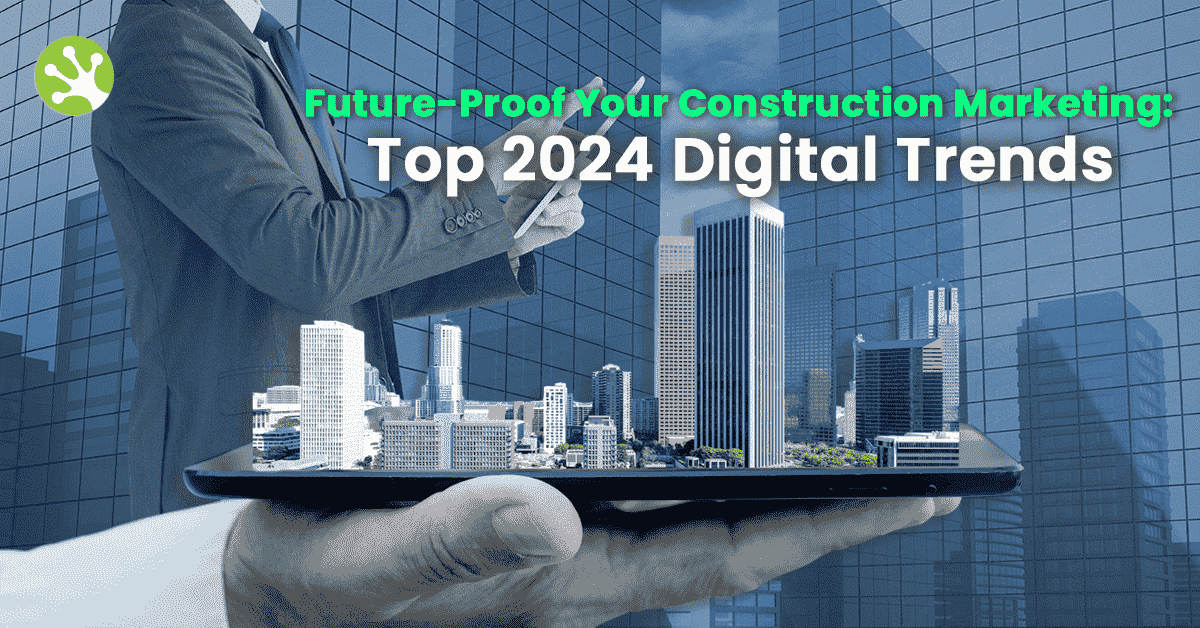
Future-Proof Your Construction Marketing: Top 2024 Digital Trends

The Philippine construction sector is currently bustling thanks to the government’s push for more infrastructure projects in 2024 and beyond, through its “Build, Build, More” program.  The industry is expected to contribute 8.4% to the nation’s GDP in 2023, with projections of continued growth in the coming years. The sector is also poised for expansion in 2023 and would go on up to 2027. Apart from the government’s infrastructure, the industry is also buoyed by a strong real estate market, rising urbanization, and energy development initiatives. Research and Markets, a market research site, forecasts the Philippine construction industry to log an annual average growth rate of 7.1% between 2025 and 2027. Amidst this backdrop, construction companies face a competitive landscape where standing out from the crowd is crucial. Digital marketing emerges as a powerful tool for this. Through this, you can reach your target audiences, generate leads, and secure projects. If you’re a senior marketing officer in this industry, this article will introduce to you to the trends LeapOut foresees in the industry this year. Why Philippine Construction Sector Needs Digital Marketing In today’s digital age, the internet is the go-to communication method used by both consumers and businesses for information and decision-making. To tap these users, Philippine construction companies should prepare and optimize digital marketing efforts because of these reasons:  Increased internet usage More than 80 million Filipinos now have access to the internet, creating a vast online audience for construction companies to reach. Shifting buyer behavior Potential clients, from individual homeowners to large corporations, are increasingly researching and comparing options online before making decisions. Competition is heading towards digital Many construction companies are already taking advantage of digital marketing strategies, making it essential for others to do the same to stay competitive.   Latest Digital Trends to Prepare for in 2024  As tech undergoes significant changes, so do digital marketing trends. Preparing for and embracing these changes can help your business get unprecedented advantages, especially in a highly competitive industry that has low digital adoption like construction.  Here are some trends your company can leverage in 2024:  1. Keep your users engaged with interactive media Construction is a discipline that requires precision, order, and structure – which some people find dull and boring. With a digitally savvy, fun-loving audience like Filipinos, many of whom are glued to their mobile phones or desktops for hours, you can introduce interactive content that can educate, entertain, and assist your users when visiting your website or social media accounts.    Here are some formats and applications you can incorporate in your content: Quizzes and polls Tap into the competitive spirit and generate user-generated content with personality quizzes, trivia challenges, and opinion polls relevant to construction. Interactive infographics Bring life to static data or images with clickable elements, animations, and micro-interactions for valuable insights and better user engagement. Interactive calculators and tools Help users estimate project costs, compare materials, or visualize their dream home by providing interactive tools they can actively use. One example is the integration of a color mixing tool in the website of one of our client’s that helps their customers decide the right color combination for painting their interiors and exteriors. 360° videos and virtual tours Offer immersive experiences showcasing construction projects, amenities, or design possibilities, giving opportunity for a virtual exploration of your projects from their mobile devices. Gamified experiences Design mini-games or interactive challenges related to your brand or industry to drive engagement, brand recall, and positive associations. 2. Utilize Social Media to Boost Trust and Leads It’s no secret that Filipinos are active mobile phone users. This device is the primary platform for Filipinos in accessing the internet, especially for architects, engineers, and other construction professionals who are usually working outdoors.  Here are some innovations you can use in optimizing your mobile marketing efforts to improve your company’s image and attract more leads: Create omnichannel experiences Integrate your online and offline marketing seamlessly through location-based triggers and augmented reality experiences to produce compelling content. Hyper-personalized campaigns Leverage real-time location data and user behavior to deliver highly targeted ads and personalized offers within your construction area. Future-ready content formats  Craft engaging content for your audiences through their mobile devices through high-definition video and interactive features for AR/VR experiences that will highlight your works in progress and final structures. 3. Leverage AR and VR In Your Campaigns Lay down the foundation of the future of construction marketing with immersive and interactive content. Virtual Reality (VR) and Augmented Reality (AR) technologies are revolutionizing how companies showcase their projects and engage with potential clients in the Philippines.  VR: Take a Virtual Walk in Your Dream Project VR allows potential clients to experience projects at scale, walk through spaces, and explore design options within an immersive environment. Through this technology, you can provide a virtual tour of your future home or property before it’s even built. You can also add breathtaking views and customizable finishes for totally immersive views.  AR: Bringing Your Blueprints to Life AR superimposes digital information onto the real world, allowing users to visualize construction projects directly on site. This technology allows you to hold on your phone and see a building’s virtual framework overlaid on an empty lot. You can also view real-time data like material placements directly on the construction site. While VR and AR are still in their early stages in the Philippine construction industry, their potential is immense. By leveraging these innovative technologies, you can differentiate your company, connect with clients on a deeper level, and build a brand for the future. As costs decrease and user adoption increases, these trends are poised to become mainstream, shaping the industry’s marketing landscape for years to come. 4. AI-Powered Personalized Marketing In the age of information overload, standing out requires personalization and top-tier customer service. Artificial intelligence (AI) is the best tool to deliver personalized messages and content across industries.  Through AI and machine learning, you can craft personalized marketing campaigns that resonate with your

Continue Reading

Top 15 Useful But Unseen AI Tools for Filipino Marketers 2024

Unveiling a treasure trove of AI-powered tools, this list introduces Filipino digital marketers to 15 invaluable yet lesser-known technologies. From enhancing content creation to refining market analysis, these tools are set to revolutionize the way digital marketing is conducted in the Philippines in 2024. Dive into our list to uncover these hidden gems! Introduction In the fast-evolving world of digital marketing, staying ahead often means discovering and leveraging lesser-known tools. This listicle unveils some of the most powerful yet unpopular AI tools in 2024 that Filipino digital marketers can utilize to gain an edge in creativity, efficiency, and analytics. Artificial intelligence (AI) has taken the world by storm. It has touched practically every part of our lives, especially at work. This technology has empowered many professionals to improve their productivity and performance. This is especially true in digital marketing, where timely delivery and work quality is of the essence. AI offers welcome solutions to some of the pressing problems this fast-paced discipline experiences. However, only a few digital marketers take advantage of these tools. LeapOut listed some of the not-so-popular AI tools to use for your daily marketing tasks. 1. Writesonic Description: An AI-powered writing assistant designed to help with creative content generation, including ad copies, product descriptions, and blog posts. How to Use: Ad Copy Generation: Input product details to receive engaging ad copies. Blog Ideas and Drafting: Get unique blog topics and draft outlines effortlessly. Product Descriptions: Create compelling and SEO-friendly product descriptions. Benefits: Creativity Boost: Overcome content creation blocks with AI-generated ideas. Time-Saving: Quickly generate drafts and copies, saving valuable time. Enhanced SEO: Improve search engine rankings with optimized content. 2. Neural Designer Description: A sophisticated AI tool for advanced data analytics and predictive modeling, ideal for market analysis and customer behavior prediction. How to Use: Market Trend Analysis: Analyze data to identify emerging market trends. Customer Behavior Prediction: Use predictive modeling to understand customer preferences. Data Visualization: Transform complex data sets into understandable visuals. Benefits: In-depth Insights: Gain a deeper understanding of market dynamics and customer preferences. Data-Driven Decisions: Make more informed marketing decisions based on robust analytics. Competitive Advantage: Stay ahead of competitors with advanced predictive capabilities. 3. PaveAI Description: An AI tool that turns analytics data into actionable marketing insights, perfect for optimizing marketing strategies and campaigns. How to Use: Analytics Integration: Connect with your analytics tools to gather data. Insight Generation: Receive clear, actionable insights based on data analysis. Strategy Optimization: Use these insights to refine marketing strategies. Benefits: Actionable Recommendations: Get practical suggestions to enhance marketing efforts. Time Efficiency: Reduce time spent on data analysis and focus on implementation. Improved Campaign Performance: Optimize campaigns for better performance based on insights. 4. Rad Ai Description: An AI-powered content optimization platform that analyzes and suggests improvements to increase engagement and conversion. How to Use: Content Analysis: Run your content through the tool for analysis. Improvement Suggestions: Receive recommendations on tone, structure, and SEO. Performance Tracking: Monitor the impact of changes on content performance. Benefits: Content Quality Improvement: Enhance the readability and appeal of your content. SEO Enhancement: Optimize content for better search engine rankings. Engagement and Conversion Boost: See higher engagement and conversion rates through optimized content. 5. Looka Description: An AI-powered logo maker that creates professional-quality logos based on user preferences, ideal for branding and identity design. How to Use: Design Preferences: Input your style preferences and brand colors. Logo Generation: The AI generates a variety of logo designs to choose from. Customization: Fine-tune your chosen logo to match your brand perfectly. Benefits: Brand Identity Creation: Quickly create a unique logo that resonates with your brand identity. Cost-Effective: Save on design costs with AI-generated logos. Ease of Use: Simplify the logo design process, accessible even for non-designers. 6. MarketMuse Description: MarketMuse is an AI-driven content planning and optimization tool, designed to help create content strategies that rank higher and engage better. How to Use: Content Inventory: Analyze your existing content to identify gaps and opportunities. Topic Research: Get AI-driven suggestions for topics that resonate with your audience. Optimization: Use AI guidance to optimize content for relevance and SEO. Benefits: Strategic Content Creation: Develop a data-driven content strategy. SEO Improvement: Enhance search rankings with optimized content. Audience Engagement: Produce content that is more relevant and engaging to your target audience. 7. Textmetrics Description: Textmetrics utilizes AI to refine and optimize the readability and SEO performance of your content, ensuring it aligns with your target demographics. How to Use: Readability Analysis: Check your content for clarity and simplicity. SEO Optimization: Get suggestions for keywords and phrasing to improve SEO. Demographic Targeting: Tailor your content’s tone and style to your specific audience. Benefits: Enhanced Readability: Make your content accessible and engaging. Improved Search Rankings: Boost SEO performance with optimized content. Audience-centric Writing: Create content that truly resonates with your target market. 8. Phrasee Description: Phrasee specializes in AI-driven copywriting for email marketing, enhancing subject lines and email content to boost open rates and engagement. How to Use: Subject Line Generation: Generate compelling subject lines that increase open rates. Email Body Optimization: Enhance the content of your emails for better engagement. Performance Analysis: Analyze the performance of different phrases and adjust strategies accordingly. Benefits: Increased Email Engagement: Drive higher open and click-through rates. Tailored Messaging: Create email content that speaks directly to your audience. Data-Driven Insights: Understand what works best in your email marketing. 9. Crayon Description: Crayon is an AI-driven market intelligence platform that provides insights into competitors’ activities, market trends, and customer preferences. How to Use: Competitor Analysis: Track and analyze competitors’ digital footprint. Market Trend Tracking: Stay updated with the latest trends in your industry. Customer Insight Gathering: Understand customer needs and preferences through AI analysis. Benefits: Competitive Intelligence: Gain a strategic edge by understanding competitors’ strategies. Market Awareness: Stay ahead of industry trends and shifts. Customer-Centric Strategies: Develop marketing tactics based on customer insights. 10. Adext AI Description: Adext AI is an AI-powered tool that automates and optimizes digital advertising campaigns across

Continue Reading

Gear Up For These Digital Marketing Trends in 2024

As customer expectations and digital capabilities shift and evolve at breakneck speeds, companies targeting Filipino netizens are faced with significant challenges. The development in search engines, social media, and other related technologies offer myriad opportunities and challenges that often overwhelm businesses, especially their marketing activities. Knowing and understanding trends in the coming year equip companies with the needed information to prepare for the coming year.  Environment for Enhanced Digital Experience The year 2024 is an interesting and exciting time for Pinoy consumers.  We have just freed ourselves from the COVID-19 pandemic. As the government scrapped the restrictions it had enforced during the height of the pandemic, we are now in a new normal where we go back to our old ways pre-pandemic while getting accustomed to fully utilizing (and relying on) online platforms and services for practically every activity.  In a blink of an eye, Gen Zeds (aged 18-26) are gradually establishing their foothold in the Philippine workforce, giving them considerable purchasing power and influence.   The use of artificial intelligence (AI) and machine learning is starting to mature at a point that it has already penetrated into, and is now an integral part of the applications we use. Living under this environment calls for radical changes, particularly in the way we use and engage with digital platforms. True enough, search engines and social media channels are starting to address these challenges. Because of this development, we predict these trends to take place in 2024: Focus on Gen Z Customers Gen Zeds and young millennials will remain engaged in social media platforms. As such, they are the ones who will most likely view your ads and content. With their growing influence, experts recommend businesses to focus on digital marketing efforts on the activities and preferences of this demographic like:  Smartphones play a significant role in their daily lives.  As digital natives, they make their purchases seamlessly by navigating the digital world in various platforms, such as social media, online games, and e-stores.  They love consuming bite-sized videos, interactive experiences, and personalized recommendations.  They champion ethical practices and causes that resonate with their values.  A significant fraction of them are now entry-level employees (and entrepreneurs) who have financial capacity to purchase online. Knowing more of their traits and their buying motivations are vital to your digital marketing success in 2024.  AI Marketing Automation More and more people are getting more acquainted with the power of AI. Savvy marketers consider the presence of AI as a blessing. Integrating AI into their workflow would supercharge marketing efficiency and quality.  In 2024, companies are seen to use AI for: Hyper-Personalization AI can crack the code on individual preferences and desires. By sifting data from different sources, it can generate:  Recommendations that predict your customer’s next purchase,  Chatbots that respond to your unique queries with human-like nuance,  Personalized ad creatives that speak directly to your target audience while triggering their pain points.   LeapOut CEO, Marvin Ortiz, believes that 2024 will usher in more personalized and targeted digital advertising, with the help of more advanced versions of programmatic advertising platforms. Content Creation  You now have an assistant content creator that can generate compelling articles, blog posts, and copies. It can also craft catchy headlines and design visually stunning graphics – all while ensuring brand consistency and SEO optimization.  Predictive Targeting AI can optimize your campaigns by analyzing mountains of data, predict consumer behavior, and identify the most profitable channels and audiences.  Empathetic Conversations on Chatbots AI is ushering in a new era of empathetic, engaging virtual assistants in chatbots. In 2024, AI personas can mirror and respond to the emotions of your customers.  Richer Search Engine Experience Search engines will further harness AI’s capabilities to give enhanced experiences. As of this posting, Google is testing its Search Generative Experience (SGE), which the tech giant might release officially within 2024. Google SGE is powered by generative AI.  Google’s SGE also hosts advanced features like Shopping Graph, the AI-powered, data set of local and overseas products and sellers updated real-time.  Social Media Shopping 2.0 Social media will remain as the primary communication and entertainment channel of Gen Zeds. Marketers are concentrating on targeting the youth through this medium, particularly on TikTok.  Seeing this, Marvin foresees enhanced social media shopping experience with the help of the latest technologies like AI in powering: Enhanced live video selling with real-time interaction and exclusive offers  Expanded use of short videos and reels following the success of TikTok Marketers will capitalize on content submitted  Integration of augmented reality (AR) and virtual reality (VR) experiences for immersive shopping experiences.  Integration of social currency like badges and rewards and gamified elements like points and virtual shopping sprees.  Micro-monetization and subscription-based purchases.   Streamlined Digital Marketing and Ecommerce Experiences  In 2024, Marvin expected continuous growth in e-commerce and digital marketing. Social media and e-commerce platforms are seen to generate more seamless multi-channel experiences to consumers. Consumers can expect a consistent journey across websites, apps, social media, physical stores, and even emerging platforms like the metaverse. Here are some ways to streamline your digital marketing and e-commerce interconnectivity across various channels: Intensified Omnichannel Marketing With the help of technology, you can break down data silos and gather insights from all channels onto a single platform. This provides a ubiquitous presence of your company, allowing for cross-channel promotions and personalized experiences for your customers across the board. Optimizing Mobile As Primary Touchpoint To make cross-channel marketing happen, companies need to optimize their presence on the primary device—smartphones. Having a mobile-first design, offering mobile payment options like Apple Pay or Google Pay, and adopting personalized mobile marketing will boost brand presence on mobile devices. Enhanced Voice Search and AI-Powered Assistants Siri, Alexa, and Google Assistant have been serving us as our companions. It’s time for companies to leverage these voice assistants to provide product information, customer service, or even personalized shopping experiences for customers. Boom in Interactive Technologies Expect a more enhanced use of augmented reality (AR) and

Continue Reading

Revolutionizing Marketing: The Power of AI in Content Creation and Strategy

In a dynamic shift within the marketing sector, a comprehensive study conducted by Bynder, a renowned digital asset management platform, has highlighted an emerging trend: the escalating integration of Artificial Intelligence (AI) in marketing. This trend is not just a fleeting one; it signifies a major move towards more streamlined, efficient processes that save time and resources. The study surveyed 104 of Bynder’s clients, including high-profile names like Spotify, Canon, and Puma, to gauge how AI tools are reshaping marketing strategies. The findings were significant: over half of these clients now employ AI for tasks such as content generation and Search Engine Optimization (SEO) enhancement. AI Content Creation: The Future of Marketing A notable aspect of the study is the revelation that 54% of Bynder’s clients use AI for the initial drafting of content. This includes a range of content types, from social media updates to essential website copy. Beyond mere content creation, AI tools are also being leveraged for tasks such as refining content, enhancing spelling and grammar, and effective paraphrasing, thereby enriching the overall quality and impact of the marketing material. The role of AI in marketing is multifaceted. Teams are utilizing AI not only for content development but also for brainstorming, generating engaging hooks, and conducting extensive research. Furthermore, AI is being used creatively to repurpose existing content and craft the distinct voice of a brand. Some clients of Bynder perceive AI as a valuable asset in elevating the quality of their marketing efforts. They are training AI to align with their specific brand tone, style, and level of engagement, ensuring consistency in their messaging. Incorporating advanced AI tools like OpenAI’s ChatGPT into marketing strategies is revolutionizing business operations. For instance, Peggy Dean, an artist and educator, utilizes ChatGPT to enhance her SEO practices and craft product descriptions, contributing significantly to an increase in her course enrollments. Jacqueline DeStefano-Tangorra, founder of a consulting firm, employs ChatGPT for creating industry-specific marketing materials and personalized business proposals. Jonathan Adashek of IBM, a leading figure in marketing and communications, highlights the imperative for marketing leaders to incorporate AI into their strategies. He suggests that failing to do so could result in falling behind in the rapidly evolving marketing landscape. Looking ahead, the study’s participants foresee AI playing a more advanced role in marketing, like personalizing web content based on user history or developing sophisticated chatbots for site navigation. Empowering (Not Replacing) Human Creativity However, the study also advocates a balanced approach to AI integration. Warren Daniels, Bynder’s CMO, emphasizes that AI should complement, not replace, human creativity. The goal is to use AI to streamline routine tasks, freeing up creative minds for more complex, innovative endeavors. In summary, Bynder’s study marks a significant shift towards AI-driven strategies in marketing. While AI offers a plethora of benefits in efficiency and creative enhancement, it’s crucial to maintain a synergy where AI supports and amplifies human creativity, rather than acting as a replacement. Regarding further insights or comments from Bynder, additional details were not available in the summarized information. [Note: This article is based on a summary of a study and reported insights. It does not directly cite or replicate content from the original Business Insider article.]  

Continue Reading

Discover the Power of CPM Benchmarks to Leverage Your Digital Ad Campaigns

As a digital advertiser, have you ever felt like you’re fumbling around in the dark regarding your ad campaigns? Do you wish you could glimpse the strategies your savvy competitors use to stay ahead of the competition? If so, you’re not alone. Without the right competitive intelligence, it’s challenging to gauge the actual effectiveness of your marketing efforts. You end up wasting precious budgets on campaigns that fail to connect with audiences. Thanks to Semrush, Leapout Digital’s marketing analytics partner, companies can finally take a peek at what top players in your industry are doing. Through its collaboration with AdClarity, a digital advertising intelligence solution, the digital marketing analytics platform conducted a study on the CPM benchmarks covering 13 industries. The findings of this research serve as your guide to intelligent decisions about your advertising plans. Keep reading to discover how understanding CPM (Cost Per Mille) benchmarks can transform your approach. Importance of CPM Benchmarks CPM represents the cost an advertiser pays per 1,000 ad impressions. It’s a crucial metric that reveals the effective allocation of your marketing budget and the efficiency of your marketing spend. Yet, advertisers are often blind to the competitive CPM rates in their niche. They need more context to evaluate their campaigns or optimize their approach.  According to Ervin Candido, Leapout Digital Paid Media Specialist, without proper benchmarking, companies could be: Overpaying for inferior ad placements Pouring money into underperforming formats Missing out on vital demographic insights Unable to negotiate better ad rates   This lack of visibility into the advertising landscape cripples your ability to compete. But fortunately, there is a solution. “By leveraging CPM benchmark data, you can transform the effectiveness of your digital advertising,” Ervin added.   CPM Benchmark Study Findings The partnership of Semrush and the marketing analytics firm AdClarity gave way to a study about CPM rates across 13 industries. The research examined ad spend and impression data from 956 top companies. The findings reveal eye-opening insights: the Food Delivery industry has the highest CPM of $7.63. It is followed closely by the Travel industry with a CPM of $7.12, while the Finance sector averaged $6.52.  Conversely, the Media sector has the lowest average CPM at $4.27, followed by Dating at $4.44. These figures mean that if you’re in a high CPM industry like Food Delivery, you’ll need larger budgets to compete. But for Media or Dating, you may have more wiggle room to get creative in your approach.   Regarding CPM by ad media, the study found that video was the most expensive at over $9 per thousand impressions. Meanwhile, simple desktop display ads cost only $2.50.   Moreover, the study reveals the Ad Spend Distribution of industries. Among the 13 industries, Jobs is the biggest spender on Mobile relative to their ad budget (74.3%). Software-as-a-service (70%) allocates most of its ad budget to Desktop while Dating to inApp (47.0%). Implications of CPM Benchmarks Findings These benchmarks are game-changing. Let’s explore how you can apply them to optimize your ad investments. Drive Interest by Elaborating on the Solution CPM Benchmark data empowers you to make smarter budget decisions. Here are some of the key ways it can enhance your digital advertising strategy: Compare Cost Efficiency by Industry Knowing your industry’s typical CPM range helps you evaluate the competitiveness of your rates. This enables you to spot expensive placements and reallocate spend where you can get more traction. Identify High-Performing Ad Formats CPM data reveals information you can use to devise winning ad strategies. Recognize which formats engage your audiences best. Then, double down on those placements while phasing out underperforming ones. Get Granular Insights on Audience Engagement Seeing CPM differences across demographics and platforms provides clues into what resonates with your customers. With these data, you can refine your targeting and creative approach accordingly. Negotiate Better Ad Deals Arm yourself with benchmarks to negotiate the most cost-efficient CPM rates with individual publishers or ad networks. You don’t have to overpay when you know the industry average. Continuously Optimize Campaigns Regularly monitor your CPM over time and adjust strategies based on the competitive climate. Staying agile will keep your ad dollars working hard. Create Desire by Spotlighting Benefits It’s clear that leveraging CPM benchmark data delivers a strategic edge: Get more impressions and reach per dollar spent Make every marketing dollar work harder Stay steps ahead of the competition Drive higher ROI from your ad investments   Improve Your Ad Campaigns with Leapout Digital  Now, you can unlock benchmarking insights to boost your marketing performance. You can access CPM data on your competitors’ ad campaigns using data from AdClarity through Semrush. With the AdClarity plugin, you can crunch these figures to get invaluable insights into your rivals’ strategies. Use them to refine your budgets, formats, targeting, and creative efforts to compete at the highest level. While you can subscribe to Semrush for these CPM and other relevant data, you may need experienced professionals who can unlock relevant information about these numbers to gain the highest returns for your advertising efforts. Leapout Digital has Paid Media experts who can help shed light on these data and provide the appropriate insights.  With Semrush as our partner, we provide accurate data that we use to get relevant insights into your paid media campaigns.   Stop overpaying for lackluster ad placements. Start making more intelligent choices guided by data. Take control of your marketing dollars and put the power of CPM benchmarking to work for your business today. Contact Leapout Digital today to achieve your CPM and other paid media goals.     

Continue Reading

Automated vs. Manual Bidding: My Professional Insights from my Adventures (and misadventures) 

Strolling down memory lane, I think back to the good old days of digital marketing. Days filled with Excel spreadsheets, data analysis, and meticulous manual targeting. From sunrise to sunset, we crunched massive amounts of data, determining the most appropriate CPC (Cost Per Click) bids, and unraveled the mysterious science of driving conversions. The hustle was real, but the gratification of boosting sales at a lower CPA (Cost Per Acquisition) was unparalleled. The only taste of automation we had back then was the simple, yet efficient Bulk upload editor.  With the advent of machine learning and artificial intelligence, the digital marketing landscape is transforming at a staggering pace. The hands-on, granular control we used to have been gradually shifting towards automation and AI (Artificial Intelligence). And as we stand on this precipice of change, it’s essential to assess when to embrace automated bidding and when to stick with the old faithful – manual bidding. When is Automated Bidding Right for you? My experience has shown that automated bidding can be your best ally when it’s used persistently and prudently. It’s not a set-it-and-forget-it tool, but rather a dynamic aide that requires fine-tuning and constant monitoring. When we tested Google’s Smart Bidding on our client accounts, we witnessed a significant improvement in performance. It felt like unearthing a hidden treasure in the quest for conversions. AI was our knight in shining armor, consistently delivering enhanced campaign results.  However, there’s a caveat. Just recently, I ran a Click to Messenger Ad on Facebook with the objective of attracting business inquiries. The outcome was baffling. My inbox was flooded with messages from unqualified leads, majorly the elderly from remote provinces in the Philippines. I figured that the audiences had a high propensity to click on messages (not to talk to an agency) but were not potential clients for a digital marketing agency. That experience was a stark reminder that machine learning, while efficient, is not always effective, especially if you lack data. So, when is automated bidding should be used on Google ads and Facebook ads? Ample Conversion Data: Automated bidding works best when it has a large pool of conversion data to learn from. This allows the algorithms to better understand the trends and patterns associated with successful conversions. If your Google Ads or Facebook Ads campaigns have been regularly accumulating significant conversions (recommended at least 30-50 conversions in the past 30 days for Google Ads and at least 50 conversions per week for Facebook’s Conversion Optimization), then automated bidding can be highly effective.    Time Constraints: When you are pressed for time and can’t afford to constantly monitor and adjust your bids, automated bidding comes to the rescue. It shoulders the responsibility of real-time bid management, freeing you to focus on strategic tasks like developing compelling ad copy, refining your targeting, and strategizing your campaign.    Driving Conversions: If your main aim is to ramp up conversions or maximize conversion value within a specified budget, automated bidding strategies can serve you well. Facebook’s “Cost Cap” and “Bid Cap” strategies and Google’s “Maximize Conversions” or “Target ROAS (return on ad spend)” strategies leverage extensive data and machine learning to predict which ad placements are likely to result in conversions or high conversion value.    Venturing Into New Territories: Whether you’re experimenting with new keywords, breaking into new markets, or targeting new audiences, automated bidding can fast-track your data collection. It allows you to experiment with diverse bid amounts efficiently, thereby expediting the learning phase of your campaigns.    Managing Complex Campaigns: If your campaign management involves multiple keywords, a myriad of ad groups, or complex targeting configurations, automated bidding can significantly simplify your task. Machine learning algorithms can adjust bids at the granular level of individual keywords or targeting settings—a feat that would be overwhelmingly time-consuming if done manually.  When should you do manual bidding? There’s no one-size-fits-all answer to this question. However, instances when automated bidding falls short provide a compelling argument for manual bidding. Take my recent tryst with Google Ads, for instance. We were receiving many unqualified leads, such as job applicants and suppliers. While these leads might have used the right keywords, they weren’t the conversions we were aiming for. But the algorithm was registering them as such and chasing these clicks, causing our budget to dwindle. In such scenarios, manual bidding offers a level of control that automated systems sometimes lack. For me, marketers should opt-in for manual bidding during these scenarios: Always-on Campaigns: Have you identified those money keywords or specific audiences that consistently drive profitable engagement to your campaigns? These are your money keywords or audiences – the ‘always-on’ and brand keywords that you need to maintain a firm grip on. In these cases, manual bidding gives you the reins to control ad positions effectively. This approach allows you to assert your dominance, ensuring that your brand remains at the forefront of relevant search results.    Data Acquisition Phases: Machine learning, for all its brilliance, is only as effective as the data it must work with. If your data pool is lacking in quality, your conversions will reflect this inadequacy. As the saying goes, “garbage in, garbage out.” Here, manual bidding comes to the rescue. It allows you to actively steer your campaigns towards acquiring the right kind of data, giving machine learning the correct base to enhance both the efficiency and effectiveness of your campaigns.    Data Reset: There will be moments when you realize that your automated bidding strategy hasn’t been working as expected. It has been chasing the wrong leads or inflating your costs. Contrary to widespread belief, this is not the end of the world. These moments of error provide opportunities for learning and growth. Switching to manual bidding in such instances lets you reset the data, offering a fresh start. You can recalibrate your campaigns, hone your targeting, and reestablish the path to achieving your desired outcomes.  Making Manual and Automated Bidding Strategy Work Together Choosing between manual and

Continue Reading

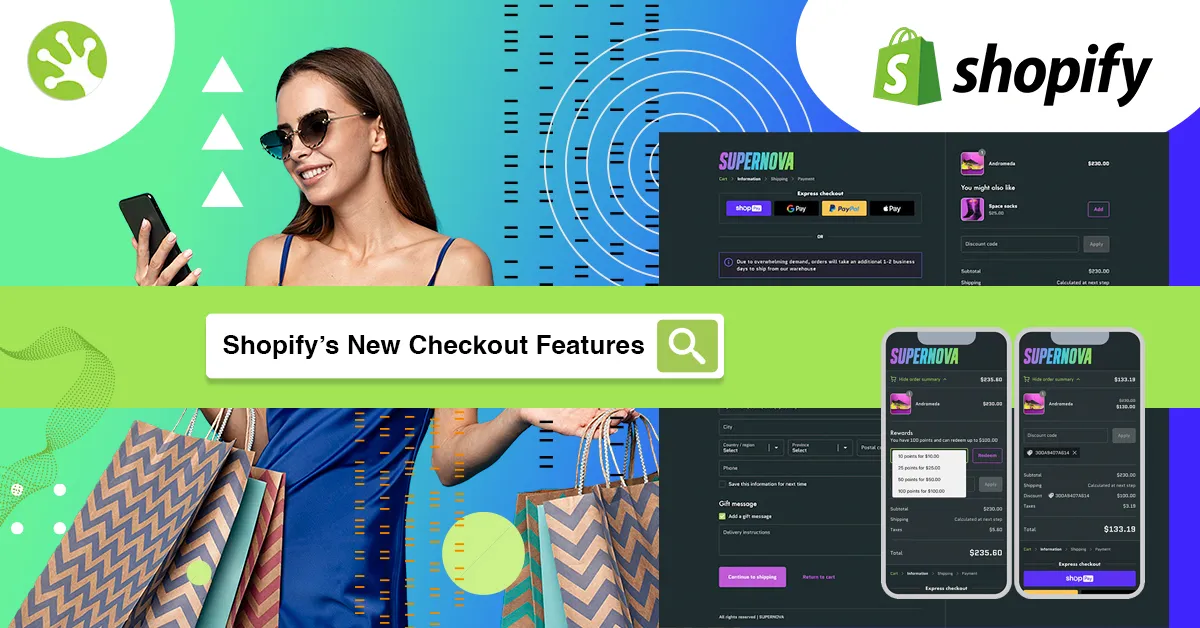
Elevate Your Store’s Checkout Experience with Shopify’s New Checkout Features

The checkout process is crucial in making or breaking your sales as a Shopify merchant. It is a crucial touchpoint in the customers’ journey that either convinces them to complete their purchase or makes them abandon their carts.  Your customers’ checkout experience should be seamless, user-friendly, and consistent with your brand to provide outstanding service. However, as an e-commerce merchant, you may think that the steps in Shopify development to meet this goal should involve coding and customizing your user interface, which is daunting.  Shopify understands this concern and has developed two solutions to help Shopify Plus merchants like you overcome the hurdles of checkout customization: Shopify’s checkout extensibility and UI extensions.  The Struggles of the Old Checkout Process—And How Shopify Addressed Them Shopify has always allowed its merchants to provide their customers with a fast and reliable checkout experience in their shops. Shopify Checkout has become a model for e-commerce businesses in checkout ease and efficiency.  However, before, for merchants to customize their shop’s checkout and make it suitable to their business needs, they had to go through a rigorous process, which was very inefficient.  First, to apply their desired advanced customizations, merchants had to request access to their checkout.liquid theme file and edit the code with the help of a developer, which is quite an inconvenient process. Furthermore, the developer had to periodically check on the customized checkout features for upgrades while keeping the changes intact, making the customization process even more troublesome.  To address this, Shopify created a way for merchants to personalize their shop’s checkout without working with code—through Checkout Extensibility and Checkout UI Extensions.  What is Shopify’s Checkout Extensibility? Shopify’s checkout extensibility is a powerful tool as it allows Shopify Plus merchants to customize the checkout experience without coding. You can purchase checkout extensibility apps from the Shopify App Store and choose the best features for your business needs. With these new features, you can build custom fields, offer products upon a customer’s checkout, customize discount settings, display notifications at checkout, and much more. Benefits of Shopify’s Checkout Extensibility Easy Customization Shopify’s checkout extensibility allows for quick and easy customization of your store checkout without requiring programming skills, making it easy for non-technical users. You can now simply purchase the apps, choosing the features that will create your envisioned customer checkout experience.  Consistent Branding What’s great about these features is that as you customize your checkout page to your desired branding settings, they automatically adapt to these, making the customer experience consistent wherever your customers choose to check out. Improved Conversions With checkout extensibility, you can create a seamless purchase experience that caters to customer needs, leading to increased conversions and consistent sales. What Are UI Extensions? Shopify’s checkout User Interface (UI) extensions allow you to adjust and modify the look and feel of your checkout page. This feature lets you create a checkout journey that precisely reflects your brand.  Benefits of UI Extensions Custom User Interface UI extensions offer complete control over checkout page customization. You can tailor it to reflect your brand’s identity and delight customers with their purchase experience. Flexible Customizations With UI extensions, you can make advanced customizations, creating unique checkout experiences that cater to your brand’s needs. The new extensions also allow you to customize discount settings, whether you want to apply them only to specific products, shipping costs, or orders amounting to a certain amount. Upon checkout, customers can also quickly redeem gift cards, discount codes, and loyalty rewards points. You can also add notifications at checkout, such as a banner that informs the customer of shipping specifications for certain products, a field that allows for an optional gift message, or special offers that customers can opt to add to their purchase or payment. You also have the option to add a custom checkout message when customers buy products from a specific category or when they earn purchase points or save money from discounts.  You can even build apps that help you track customer behavior at the post-purchase stage and make advanced customizations to your checkout page appearance. Customer Engagement With checkout UI extensions, e-commerce merchants can create a visually stunning checkout experience that captivates customer attention, encouraging them to complete their purchase. Why Choose Checkout Extensibility or UI Extensions? Shopify’s Checkout Extensibility and Checkout UI Extensions contribute to faster checkout and better customer experience, increasing conversions. Moreover, Shopify Plus merchants like you who want to customize your brand’s checkout experience no longer need to go through checkout.liquid and can now enjoy the convenience of flexible, creative customizations that can be upgraded safely. Choosing which features to implement just depends on what you wish to achieve with your checkout customization. Checkout extensibility is the best route if you want quick and easy customization that does not require a developer’s expertise. If you want advanced customizations that go beyond what Shopify’s checkout extensibility can offer, utilizing the skills of a developer, UI extensions are the way to go. Both features can be an excellent addition to your Shopify store. An intuitive checkout can significantly impact your store’s success and improve the customer experience while catering to your business needs. A Worthwhile Investment for Your Brand Shopify’s checkout extensibility and UI extensions are powerful tools that help you create a checkout experience perfectly suited to your business needs. You can purchase checkout extensibility apps with features catering to purchase journeys—from custom fields down to cart customization. And if you require advanced customizations beyond Shopify’s checkout extensibility features, you can utilize UI extensions to create a visually stunning checkout experience that engages your customers and reflects your brand. These features ultimately lead to increased conversions and customer engagement, making Shopify development a worthwhile investment for your brand. As a Shopify Partner, LeapOut can provide further support that caters to your shop’s unique needs as you create customizations in your shop to highlight your brand identity. Get in touch with LeapOut today and experience success in your business like never before.

Continue Reading

Ajinomoto Philippines Launches Web App to Help You Eat Well, Live Well

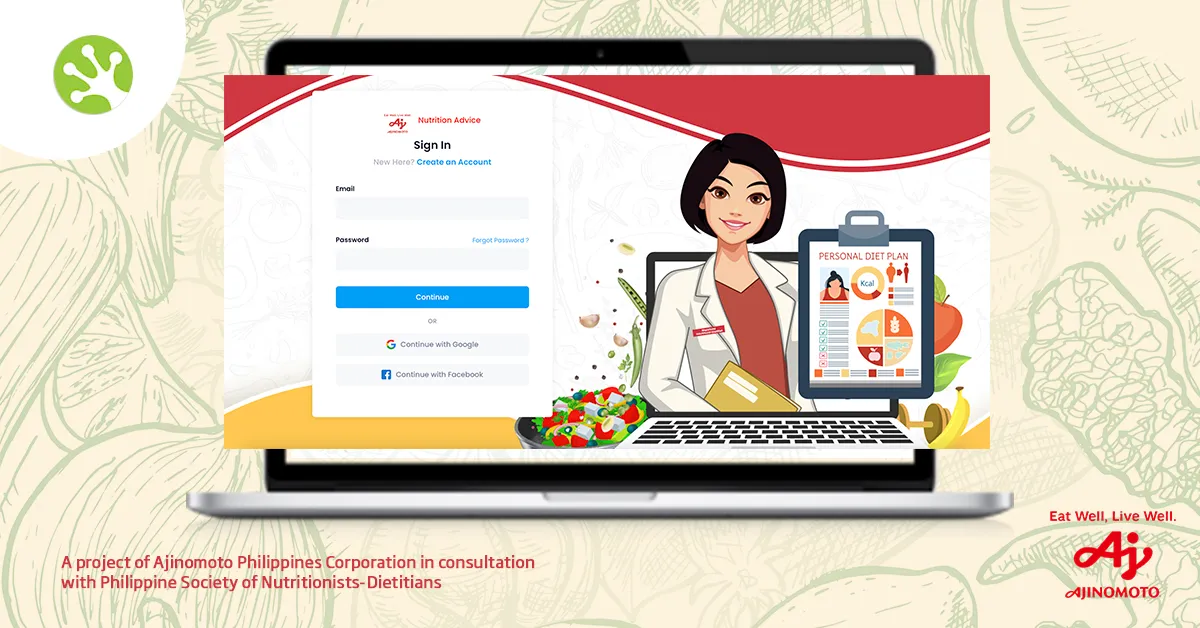
Ajinomoto Philippines launches a revolutionary web app to empower Filipinos in pursuit of healthier lifestyles through nutrition. Ajinomoto Philippines is proud to announce the launch of its new web app, designed to help Filipinos achieve healthier nutrition and lifestyles. The new web app is an innovative nutrition help desk where users can get personalized meal plans and recipes based on their unique health information and lifestyle habits.  The recipes featured on the web app come from Ajinomoto’s own Cookmunity website, where all the dishes are cooked with Ajinomoto products. With the web app, users get meal plans suitable to their dietary needs and preferences, enabling them to leap towards a better lifestyle.  One of the most significant advantages of the Ajinomoto web app is its ability to cater to the diverse nutritional requirements of Filipinos. Utilizing this web app will improve people’s eating habits and, consequently, their lifestyle, contributing to the idea behind its creation—eating well to live well. To develop this groundbreaking application, Ajinomoto Philippines partnered with Leapout for its web and app development capabilities.   In addition, Ajinomoto recognizes that for many Filipinos, there is limited access to expert dietary advice and wants them to be empowered with knowledge about nutrition. That’s why the app allows users to access resources such as personalized dietary recommendations and nutritional guidance from professional dietitians. This new web app is Ajinomoto’s way of helping them make better food choices so they can lead healthier lives.  With the launch of this new web app, Ajinomoto is taking another step forward in helping Filipinos achieve healthier lifestyles through good nutrition. The application provides personalized meal plans, access to recipes, personalized dietary recommendations, and nutritional advice, all of which help Filipinos lead healthier lives. So don’t wait—create an account for free with the web app today and start eating well for a better tomorrow!

Continue Reading

AFFILIATIONS

AFFILIATIONS

AFFILIATIONS

AFFILIATIONS

AFFILIATIONS

AFFILIATIONS

AFFILIATIONS

Talk To Us!

Have any question? We are always open to talk about your business, new projects, creative opportunities and how we can help you.